

Did you know that domestic cats in the UK are estimated to kill up to 55 million birds every single year? This staggering figure highlights the delicate balance between our pets and the local wildlife we strive to protect. If you've spent your morning clearing away unpleasant mess from your lawn or worrying about nesting birds, you aren't alone. Finding an effective deterrent for cats in the garden is about more than just cleanliness; it's about reclaiming your peace of mind through ethical intervention.
We understand the frustration of recurring territorial marking and the desire to keep your flower beds pristine without causing harm. This guide promises to show you the most ethical, non-toxic ways to discourage feline visitors whilst ensuring your garden remains a safe haven. You'll learn about sophisticated scent-based solutions and durable, clay-based granules that offer months of protection. We will explore the latest humane strategies for 2026 that finally put an end to the cycle of daily garden maintenance and keep your outdoor space poop-free.
Key Takeaways
- Learn how to distinguish between cat and fox activity to address the specific source of your garden disturbance effectively.
- Understand the science of scent and how it communicates with feline instincts to discourage territorial marking naturally.
- Discover why clay-based granules provide a more reliable deterrent for cats in the garden than hit-or-miss electronic devices.
- Master the essential preparation steps for clearing existing scent marks to ensure your chosen solution works from day one.
- Explore how humane, non-toxic formulas offer durable protection whilst safeguarding birds and beneficial garden insects.
Understanding the Impact of Feline Visitors in Your Garden
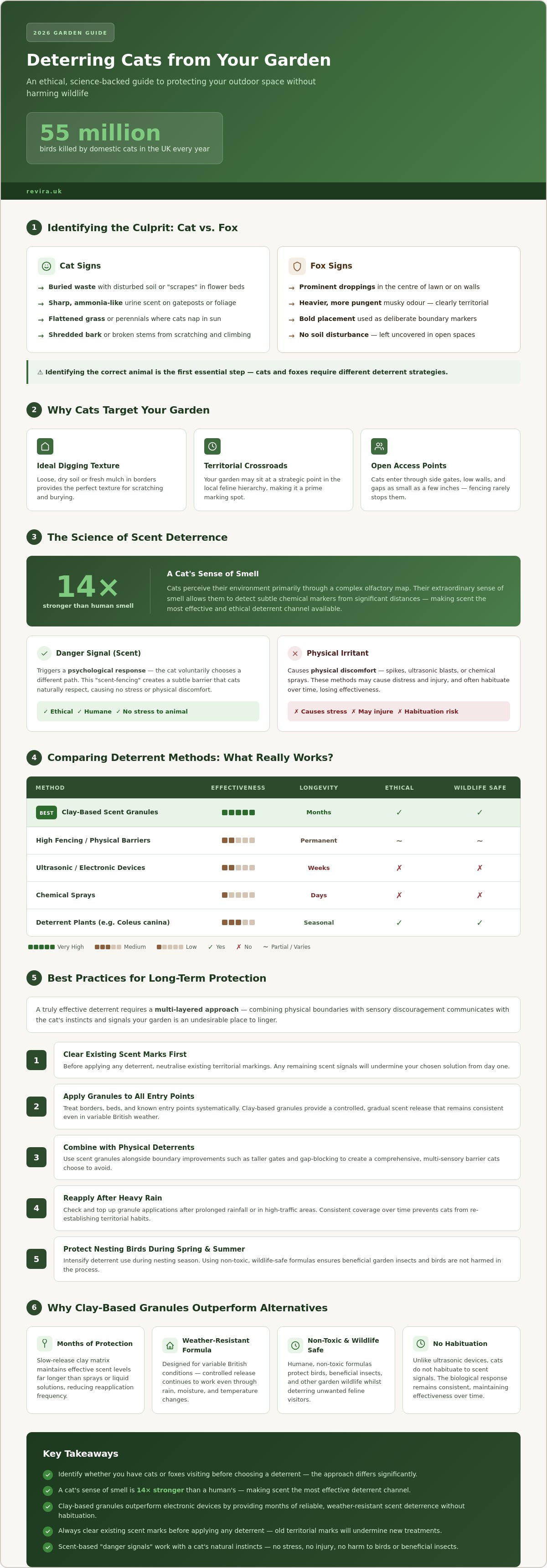
Identifying the culprit is the first essential step toward a cleaner, more peaceful outdoor space. Many gardeners find themselves confused by recurring mess, often struggling to tell the difference between cat fouling and fox dung. Cats are instinctively tidy creatures that prefer to bury their waste, so you will often find disturbed soil or "scrapes" in your flower beds. Foxes, however, use their droppings as bold territorial markers, frequently leaving them in prominent positions like the centre of a lawn or on top of garden walls. The odour also differs; cat urine has a sharp, ammonia-like scent, whilst fox musk is heavier and more pungent.
Cats are drawn to specific gardens for very practical reasons. If your borders feature loose, dry soil or fresh mulch, they provide the ideal texture for digging. Your garden may also sit at a strategic crossroads in the local feline hierarchy, making it a prime spot for territorial marking. This isn't just a nuisance for the homeowner; it has a measurable effect on local biodiversity. With the UK cat population remaining high in 2026, protecting garden birds during nesting season is a priority for many. Moving from a state of frustration to a proactive management strategy allows you to protect your property whilst respecting the natural behaviour of local animals.
Common Signs of Cat Intrusion
The evidence of a visiting cat is usually quite specific. You might notice flattened areas in long grass or amongst delicate perennials where a cat has decided to nap in the sun. Other common signs include:
- Scraped earth: Freshly dug holes in vegetable patches or borders, often with plants uprooted in the process.
- Urine marking: A strong, lingering scent on gateposts, vertical garden features, or low-hanging foliage.
- Plant damage: Shredded bark on young trees or broken stems caused by scratching behaviour and climbing.
Why Traditional Fencing Often Fails
Many homeowners invest heavily in high fences, only to find they offer little protection. Cats are remarkably agile and can easily scale a six-foot boundary or squeeze through gaps as small as a few inches. In suburban British gardens, the "open door" problem is common, where cats simply walk through side gates or hop over low walls from a neighbour's property. When researching various types of cat deterrents, it becomes clear that physical barriers are rarely a complete solution on their own.
A truly effective deterrent for cats in the garden requires a multi-layered approach. Instead of relying solely on a fence, successful gardeners combine physical boundaries with sensory discouragement. This method communicates with the cat's instincts, signalling that your garden is an undesirable place to linger without the need for aggressive or unsightly barriers. By understanding why cats visit, you can implement a more sophisticated, long-lasting solution that works in harmony with your garden's design.
The Science of Scent: How a Natural Deterrent for Cats in the Garden Works
Cats perceive their environment primarily through a complex olfactory map. Their sense of smell is roughly 14 times stronger than a human's, allowing them to detect subtle chemical markers from significant distances. This biological trait makes scent the most effective channel for discouraging unwanted visitors. A scent-based deterrent for cats in the garden works by introducing specific odours that signal an area is either occupied by a rival or simply unpleasant to linger in. It is a method rooted in biology rather than force.
Instead of using harsh chemicals or startling noises, this approach relies on clear communication. By using natural scents, you are speaking the cat's language. This is why many experts recommend humane deterrents for cats that respect the animal's welfare whilst protecting your property. Using specialised clay-based deterrent granules allows for a controlled, gradual release of these scents, ensuring the message remains consistent even in the variable British weather.
Communication vs. Harassment
Scent deterrents work with a cat's natural instincts rather than against them. There is a vital distinction between a 'danger signal' and a 'physical irritant'. A danger signal triggers a psychological response, prompting the cat to choose a different path voluntarily. This "scent-fencing" creates a subtle barrier that cats respect. It avoids the stress associated with sudden noises or physical discomfort, making it a truly ethical choice for the conscientious gardener. It feels like a quiet conversation between you and the animal, establishing clear boundaries without conflict.
Why Clay Granules Outperform Sprays and Peels
Common household remedies like orange peel, coffee grounds, or vinegar are often recommended as DIY solutions. However, these methods frequently fail because they lack durability. A single rain shower or a few hours of wind can neutralise the effect. Clay granules provide a sophisticated, weather-resistant medium that locks the deterrent scent deep within its porous structure. This 'slow-release' advantage means the barrier remains effective for several weeks. It provides a stable solution that doesn't require the constant reapplication associated with liquid sprays or kitchen scraps, offering long-term peace of mind with minimal effort.
Comparing Garden Cat Deterrents: What Really Works in 2026?
Choosing an effective deterrent for cats in the garden requires balancing personal convenience with ecological responsibility. By 2026, the market has evolved beyond simple physical barriers to include high-tech sensors and sophisticated biological solutions. However, not every "proven" method delivers consistent results in a typical British garden environment. Selecting the right tool involves understanding the trade-offs between immediate impact and long-term sustainability. It's about finding a solution that respects your space and the animals that pass through it.
Electronic and Mechanical Methods
Ultrasonic devices remain a popular choice, yet their efficacy varies significantly between individual cats. Whilst they are discreet, these devices can inadvertently cause distress to other garden visitors, including domestic dogs and local hedgehogs. Many homeowners also find that cats eventually habituate to the sound, rendering the device ineffective over time. Motion-activated sprinklers offer a more immediate physical deterrent, but they come with high-maintenance requirements. They are often weather-dependent and can be triggered by moving branches or other wildlife, leading to wasted water and soggy lawns. If you are looking for a broader list of practical options, Best Friends Animal Society's guide offers a helpful starting point for comparing mechanical interventions.
Physical deterrents like prickle strips or netting can be effective for protecting specific vegetable patches. However, these methods often compromise the aesthetic of a well-tended garden. They also require constant adjustment as plants grow. Reflective objects and 'scarecrow' silhouettes are frequently suggested as low-cost alternatives, but their success is usually short-lived. Cats are intelligent animals; once they realise the static object poses no real threat, they quickly return to their previous habits. A more sophisticated approach is needed to achieve lasting results.
Chemical vs. Natural Repellents
Traditional chemical repellents often rely on pungent pesticides or harsh irritants. These substances can leach into the soil, potentially harming beneficial insects and compromising the health of your plants. In a family garden where children or pets play, these toxic options are increasingly viewed as outdated and unnecessary. The shift towards mineral-based, non-toxic solutions reflects a growing commitment to garden safety and environmental health. These modern alternatives provide efficacy without the ecological footprint.
Revira focuses on a different philosophy: humane, non-lethal deterrence. Instead of trying to exclude the animal through force or discomfort, the goal is to gently guide them away. Clay-based granules represent a significant advancement in this area. They offer a stable medium for scent-based communication that respects the cat's welfare whilst providing the homeowner with reliable protection. By choosing a natural mineral solution, you protect your garden's ecosystem and ensure your deterrent remains effective without the risks associated with synthetic chemicals.
Best Practices for Applying Deterrents to Ensure Long-Term Protection
Success with a deterrent for cats in the garden depends heavily on how you prepare the environment. Simply scattering a product over existing mess will rarely yield the results you desire. You must address the existing territorial signals before establishing a new boundary. It's a methodical process that ensures the deterrent's message is heard clearly by any visiting feline. By following a structured application routine, you can transform your garden from a communal litter tray into a protected private space.
Preparation and Cleaning
You must "clean the slate" before any application takes place. Removing existing cat faeces is vital because waste serves as a primary scent marker that tells other cats the area is "safe" or occupied. If these markers remain, the cat's instinct to return and renew their claim will often override the deterrent. Neutralising urine scents is equally important. Use a biological cleaner or a simple water and white vinegar solution to break down the pheromones that plain water cannot touch. Ensure you clear away fallen leaves, heavy mulch, or garden debris so that your granules make direct contact with the ground. This contact allows the scent to permeate the soil and create a more stable, long-lasting barrier that won't simply blow away.
Strategic Application Techniques
Once the garden is clean, focus on strategic placement rather than random scattering. Creating a "perimeter fence" involves applying a thin, continuous line of granules along the entire boundary where cats typically enter, such as under gates or along the base of fences. This creates a psychological barrier that the cat encounters the moment they step onto your property. Targeting specific "hotspots" is also effective. Freshly tilled flower beds and vegetable patches are natural magnets for digging behaviour. By concentrating your efforts here, you address the areas of highest attraction. You can also use these granules in conjunction with broader natural cat repellent strategies, such as planting dense ground cover or using cobbles to reduce the amount of open, attractive soil available.
Consistency is the final piece of the puzzle. Whilst high-quality clay granules are remarkably durable, they aren't permanent. In typical UK weather conditions, a single application usually provides effective protection for three to six months. Refreshing the barrier after this period, or after particularly heavy winter storms, maintains the integrity of the psychological boundary. This proactive maintenance ensures your garden remains a peaceful, poop-free space throughout the year without the need for daily intervention. If you're ready to establish your own protective barrier, you can order your supply of non-toxic deterrent granules here and reclaim your garden today.
Why Revira Granules are the Conscientious Choice for UK Gardens
Revira represents a significant shift in how we manage our outdoor spaces. Instead of viewing visiting animals as pests to be defeated, we see them as neighbours to be guided. Our clay-based granules provide a sophisticated, non-toxic deterrent for cats in the garden that aligns perfectly with the values of a conscientious guardian. This philosophy prioritises the safety of the broader ecosystem whilst ensuring your property remains protected from unwanted mess and disturbance. It is about creating boundaries that respect the natural world.
Developed in Norway and trusted across the Nordic region for decades, our specialised formula has been refined since 2002. It offers a reliable, professional-grade alternative to chemical pesticides or noisy electronic devices. Because the solution is mineral-based, it integrates seamlessly into any wildlife-friendly garden plan. You can protect your nesting birds and encourage local hedgehogs without worrying about the harmful side effects often associated with traditional pest control. This approach provides stability and peace of mind for the modern homeowner.
The Revira Difference: Safety and Efficacy
The core of the Revira solution is its remarkable simplicity. There are no batteries to replace, no wires to trip over, and no complex settings to adjust. You simply scatter the granules and let the scent-based communication do the work. This ease of application makes it an ideal choice for busy gardeners who want results without the hassle of high-maintenance equipment. It is a set-and-forget solution that respects your time as much as it respects the environment.
Our granules are specifically designed to withstand the unpredictable British climate. Unlike liquid sprays that wash away after a light drizzle, the clay medium locks in the scent, releasing it gradually over several months. It remains effective through rain, wind, and frost, providing a consistent deterrent for cats in the garden that feline visitors learn to respect. Most importantly, the formula is completely harmless to your own pets and the beneficial insects that help your garden thrive.
Taking the Next Step Toward a Peaceful Garden
Choosing the right quantity is the first step toward reclaiming your space. A single 2-litre bag is typically sufficient to protect up to 250 square metres or create a substantial 125-metre perimeter. This ensures that even larger suburban gardens can be secured with a single application. For those seeking a comprehensive strategy, our detailed guide on stopping cats crapping in your garden provides an essential checklist for long-term success.
Reclaiming your outdoor space doesn't have to involve conflict or harmful chemicals. By choosing a solution that respects the natural world, you create a garden that is both pristine and ethical. Revira offers the stability and proven quality you need to enjoy your garden once again. It's time to move past the frustration of recurring mess and embrace a humane, professional-grade solution that truly works in harmony with nature.
Reclaiming Your Garden Space Peacefully
Reclaiming your outdoor space is a methodical process that begins with understanding feline behaviour and ends with establishing clear, scent-based boundaries. We have explored how a natural deterrent for cats in the garden works by communicating with an animal's instincts rather than relying on startling noises or harmful chemicals. By cleaning existing scent marks and applying durable, clay-based granules, you create a psychological barrier that cats learn to respect over time. This approach ensures your garden remains a private sanctuary without causing distress to local wildlife.
Revira provides a proven solution for those who value ethical wildlife management. Our non-toxic and eco-friendly formula offers effective protection without the need for traps or toxic substances, making it a trusted choice amongst UK gardeners. You can maintain a pristine lawn whilst ensuring your garden remains a safe haven for birds and beneficial insects. It's a practical way to achieve long-lasting results without compromising your environmental values or your peace of mind.
Discover Revira's Humane Cat Deterrent Granules to start your journey toward a cleaner, more harmonious garden today. You don't have to settle for recurring mess or unpleasant smells. With a professional-grade, humane approach, a peaceful and poop-free garden is well within your reach.
Frequently Asked Questions
What smells do cats hate the most to stop them pooping in the garden?
Cats have a strong aversion to citrus, lavender, and coleus canina. These scents signal that an area is unsuitable for lingering or marking. Whilst household scraps like lemon peel offer temporary relief, they lack durability. Specialised scent-based granules provide a more stable deterrent for cats in the garden by releasing these signals gradually. This consistent presence effectively discourages them from using your flower beds or lawn as a litter tray.
Are cat deterrent granules safe for my own dog or pet cat?
Non-toxic, mineral-based granules are completely safe for your own dogs and cats. Because these products rely on scent-based communication rather than harmful chemicals or poisons, they don't pose a risk to your pets' health. Your own animals may notice the scent, but it acts as a subtle boundary marker rather than a physical irritant. This ensures your garden remains a safe environment for your entire family, including your four-legged members.
How long do natural cat deterrents last before they need reapplying?
Natural deterrents typically remain effective for three to six months in standard UK weather conditions. The durability of clay-based granules allows them to withstand rain and wind far better than liquid sprays or kitchen remedies. You should consider refreshing the barrier after particularly heavy winter storms or if you notice a return of feline activity. This long-lasting protection minimises the need for daily maintenance whilst providing reliable security for your outdoor space.
Will cat deterrents affect the birds visiting my garden feeders?
Scent-based cat deterrents do not affect the birds visiting your feeders. Birds have a much less developed sense of smell compared to mammals, so they won't be discouraged by the granules. In fact, using an effective deterrent for cats in the garden actively protects your local bird population by discouraging predators from nesting areas and feeding stations. It's a responsible way to support garden biodiversity whilst maintaining a clean property.
Can I use cat deterrents in my vegetable patch safely?
You can safely use non-toxic, clay-based deterrents in your vegetable patch. These mineral-based granules don't contain synthetic pesticides or herbicides that could leach into your home-grown produce. They provide a humane way to protect your young seedlings and freshly tilled soil from digging behaviour. Simply scatter the granules around the perimeter of your vegetable beds to establish a clear boundary that respects your food crops and the soil health.
Why do cats keep coming back to my garden even after I've cleaned up?
Cats return because traditional cleaning often fails to remove the invisible pheromones left behind during territorial marking. Even if the physical mess is gone, the scent signals to the cat that the garden is still their territory. To break this cycle, you must neutralise these odours with a biological cleaner before applying a deterrent. This resets the area, allowing the new deterrent scents to establish a fresh, discouraging boundary that cats will respect.
Do ultrasonic cat repellers really work or are granules better?
Ultrasonic devices often deliver inconsistent results because cats can become habituated to the noise, whereas scent granules communicate through a cat's primary sense. Many cats eventually ignore the high-frequency sounds, especially if the device is poorly positioned. Granules provide a more reliable deterrent because they create a constant psychological barrier. They also avoid the potential noise pollution that can distress other sensitive garden wildlife like hedgehogs or domestic dogs.
How can I stop a neighbour's cat from digging up my flower beds?
To stop a neighbour's cat from digging, you should create a scent fence around the perimeter of your flower beds. Target the specific entry points where the cat enters your garden, such as gaps under fences or low walls. Applying granules directly to freshly turned soil is particularly effective, as this is where cats are most likely to dig. This proactive approach establishes a clear boundary that discourages them from entering your borders in the first place.